

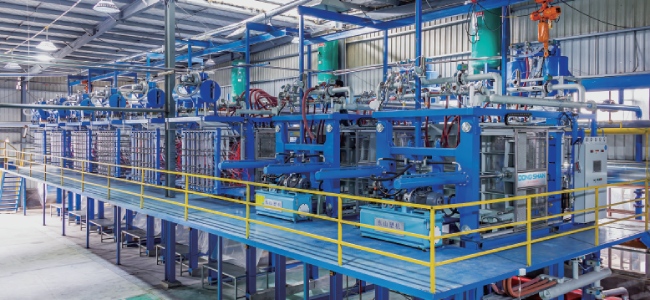





Your EPS beads act like tiny drama queens—over-expanding, clumping, and wasting steam, while you just want stable foam and predictable density without babysitting every batch.
Upgrade to modern EPS batch pre expander control, guided by proven benchmarks in this industry EPS processing report, to boost efficiency and consistency.
1. ⚙️ Core Principles and Process Flow of EPS Batch Pre Expander Technology
EPS batch pre expander technology controls bead heating, expansion, and aging in a closed cycle, delivering precise density and stable quality for molding and packaging lines.
The process uses steam, agitation, and ventilation to expand polystyrene beads to a set bulk density, then stabilizes internal pressure to prevent fusion problems and shrinkage.
1.1 Raw Material Feeding and Pre-Heating
Accurate bead feeding and gentle pre-heating start the process. Stable intake reduces dust, clumping, and thermal stress on EPS beads.
- Automatic weighing and loading
- Screening to remove fines
- Moisture control before foaming
1.2 Steam Expansion and Bead Foaming
Controlled steam pressure softens the beads, and pentane inside expands to form closed cells, creating low-density foam with predictable behavior.
| Parameter | Typical Range |
|---|---|
| Steam pressure | 0.35–0.55 MPa |
| Expansion ratio | 10–50x |
| Cycle time | 2–6 minutes |
1.3 Aging, Venting, and Pressure Balance
Aging silos allow air to replace pentane in the cells. This improves bead strength, welding performance, and dimension stability in later molding stages.
- Forced or natural ventilation
- Timed silo residence
- Temperature and humidity supervision
1.4 Integration with Downstream EPS Processes
Consistent pre-expansion supports molding, cutting, and recycling. Automated links reduce handling losses and ensure traceable density batches for each production order.
- Link to block and shape molding
- Closed-loop recycle bead handling
- Production data collection for quality control
2. 📈 Enhancing Bulk Density Stability and Bead Uniformity in EPS Production
Stable bulk density improves foam flow, mold filling, and mechanical performance. Uniform beads reduce waste, improve yield, and lower steam consumption per unit output.
Advanced batch control, combined with precise weighing and temperature feedback, helps producers hit tight density targets for insulation, packaging, and special applications.
2.1 Key Factors Affecting Bulk Density
Feed temperature, steam pressure, and venting time strongly influence final density. Operators should monitor each factor in real time and adjust recipes by product type.
| Factor | Impact on Density |
|---|---|
| Steam pressure | Higher pressure lowers density |
| Cycle time | Longer time increases expansion |
| Initial bead size | Smaller beads reach lower density |
2.2 Bead Uniformity and Cell Structure Control
Uniform bead size and even cell structure improve molding fusion and surface finish. Batch pre expanders can fine-tune heating and agitation to reduce size variation.
- Gentle mechanical mixing
- Balanced steam distribution
- Optimized bead residence time
2.3 Data-Driven Optimization Using Inline Measurement
Inline bulk density measurement allows operators to correct deviations quickly. Trend analysis supports recipe refinement and faster setup for new product runs.
2.4 Linking Batch Control to Advanced Equipment
Modern lines use smart batch pre expanders to achieve narrow density tolerance. Systems such as the High-Capacity Automatic Batch 1500 EPS Pre-expanding Machine for Fast-Cycle Industrial Manufacturing support fast cycles and strong repeatability.
3. 🌡️ Energy Efficiency, Steam Utilization, and Temperature Control Strategies
Improved steam management and accurate temperature control significantly cut energy use, stabilize bead quality, and extend equipment life across continuous industrial EPS operations.
Producers can reduce costs by optimizing steam routing, reclaiming condensate, and using automation to keep expansion curves within narrow temperature windows.
3.1 Steam Pressure Optimization and Condensate Recovery
Using the lowest stable steam pressure reduces heat loss and scale buildup. Condensate recovery returns hot water to the boiler loop, lowering fuel demand.
- Step-down pressure control
- Insulated steam lines
- Automatic condensate return
3.2 Intelligent Temperature Monitoring and Control Loops
Real-time sensors track bead temperature and steam conditions. PID or model-based controllers adjust valves automatically to avoid over-foaming or under-expansion.
| Control Point | Benefit |
|---|---|
| Bead temperature | Prevents cell collapse |
| Steam valve position | Limits pressure spikes |
| Exhaust air temperature | Indicates energy loss |
3.3 High-Efficiency Automatic Pre-Foaming Solutions
Machines such as the Fully Automatic EPS Pre-Foaming Machine High Efficiency Intelligent Model use optimized steam paths, smart temperature logic, and recipe management to deliver both low energy use and high throughput.
4. 🛡️ Safety Standards, Environmental Compliance, and Emission Reduction in EPS Foaming
Modern EPS batch pre expander systems must manage pentane safely, meet air emission rules, and reduce workplace exposure to dust and heat.
Producers adopt enclosed handling, solvent recovery, and fire-safe design to keep production stable while following local regulations and global environmental guidelines.
4.1 Pentane Handling and Explosion Protection
Proper ventilation, gas detection, and electrical zoning reduce ignition risks around pre expansion and aging areas where pentane vapors can accumulate.
- ATEX or equivalent zoning
- Continuous gas monitoring
- Ignition source control
4.2 Emission Reduction and VOC Management
Activated carbon beds, thermal oxidizers, or recovery systems capture VOCs from exhaust air, lowering environmental impact and easing permit compliance.
| Method | Main Advantage |
|---|---|
| Carbon adsorption | Lower operating cost |
| Thermal oxidation | High destruction efficiency |
| Solvent recovery | Pentane reuse potential |
4.3 Occupational Health and Dust Control
Enclosed conveyors, filters, and sound-insulated machines improve worker comfort. Routine cleaning prevents bead build-up and reduces slipping and fire risks.
- Local dust extraction
- Regular housekeeping plans
- Noise and heat shielding
5. 🏭 Industrial Application Cases and Technical Advantages of Dongshan Plastic Machinery Systems
Dongshan Plastic Machinery offers integrated EPS pre expansion systems that support high-volume insulation, packaging, and specialty foam producers worldwide.
Their equipment combines robust frames, optimized steam circuits, and digital control for long-term stable output and flexible product switching.
5.1 High-Capacity Lines for Building Insulation
For wall and roof boards, stable low density and tight tolerance are critical. Dongshan systems deliver consistent beads that mold into strong, uniform insulation blocks.
- High throughput per hour
- Reliable bead aging management
- Compatible with recycled content
5.2 Fast-Cycle Packaging and Shape Molding
Packaging producers need rapid pre expansion with repeatable bead behavior. Automated batch recipes shorten changeovers between different protective packaging designs.
| Benefit | Impact |
|---|---|
| Short cycle times | Higher daily output |
| Stable density | Reduced scrap rate |
| Smart controls | Faster setup |
5.3 Continuous Pre-Expansion and System Integration
For very large plants, the Industrial EPS Continuous Pre-Expander System supports steady operation, reduced labour demand, and smooth connection with silo farms and molding lines.
Conclusion
EPS batch pre expander technology is central to density control, bead quality, and energy use in modern foam plants. Reliable machines and smart control strategies improve productivity and reduce costs.
By adopting optimized steam systems, safe pentane handling, and data-driven density management, producers can meet strict quality, safety, and environmental targets across diverse EPS markets.
Frequently Asked Questions about eps batch pre expander machine
1. What is the main function of an EPS batch pre expander?
An EPS batch pre expander heats and expands raw beads to a target bulk density, then stabilizes them for later molding into blocks or shaped parts.
2. How does a batch pre expander control final bulk density?
The machine adjusts steam pressure, cycle time, and bead load weight. Sensors measure bulk density, and the control system fine-tunes recipes for each product.
3. Why is bead aging important after pre expansion?
Aging allows air to replace pentane inside the beads. This stabilizes size, improves welding in molds, and reduces shrinkage or deformation in finished parts.
4. What energy-saving features should I look for?
Key features include optimized steam valves, insulated piping, condensate recovery, variable-speed drives for fans, and automatic shutdown during idle periods.
5. Can one pre expander handle different EPS products?
Yes. Modern machines store multiple recipes. Operators can switch between densities, bead grades, and applications with minimal manual adjustment and downtime.

 Privacy settings