




Your EPS block moulding machine feels like a moody robot—one day it prints perfect blocks, the next it acts like it skipped coffee. Settings, steam, and pressure all seem to speak a secret engineer-only language.
This guide breaks configuration into simple, repeatable steps, so you tame waste, defects, and downtime. Backed by data from the International Energy Agency, it shows how correct setup boosts efficiency and cuts energy costs.
⚙️ Key Components of an EPS Block Moulding Machine Configuration
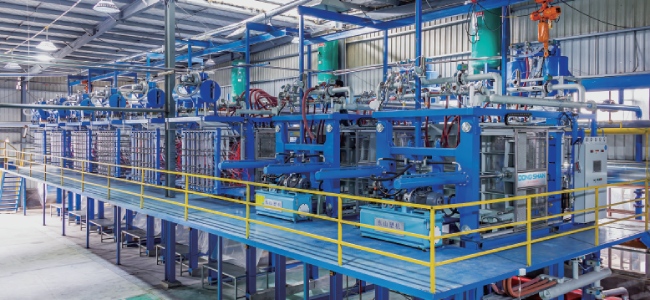
EPS block moulding performance depends on a balanced configuration of feeding, foaming, moulding, and control systems. Each part must match your density, size, and output needs.
Good configuration reduces waste, improves block strength, and keeps cycle times stable, even when raw material quality changes between batches.
1. Raw Material Feeding and Pre-Expanding System
The pre-expander controls bead size and density. A Fully Automatic EPS Pre-Foaming Machine High Efficiency Intelligent Model helps keep density uniform across the whole block.
- Automatic weighing and loading
- Stable steam pressure adjustment
- Accurate density control and logging
2. Block Mould Frame, Chamber, and Trolley
The mould frame defines maximum block size and rigidity. Strong frames reduce deformation and help keep cutting accuracy high during long runs.
- Reinforced steel structure
- Flexible block height adjustment
- Fast opening and closing mechanism
3. Steam, Vacuum, and Cooling Circuit
Steam, vacuum, and water lines work together to fuse beads evenly. A balanced circuit shortens cycle time and avoids internal voids.
| System | Main Role |
|---|---|
| Steam | Bead fusion and expansion |
| Vacuum | Moisture removal and stabilization |
| Cooling | Block hardening and shape stability |
4. PLC, Sensors, and Safety Devices
Reliable PLC control keeps temperature, pressure, and time within narrow limits. This improves repeatability and lowers operator workload.
- Touch-screen recipe storage
- Pressure, level, and temperature sensors
- Emergency stops, door locks, alarms
🏗️ Choosing Appropriate Machine Capacity for Different EPS Block Applications
Capacity planning should follow your daily tonnage, block sizes, and product mix. Correct sizing avoids both bottlenecks and idle, wasted investment.
Consider building materials, insulation sheets, packaging blocks, and special shapes to match chamber volume, cycle time, and automation level.
1. Capacity Needs for Construction and Insulation Blocks
Construction-grade blocks need stable density and large volume. Use larger chambers and higher steam power to support continuous wall and roof panel cutting.
- Block size: up to 6 m length
- Medium to high density ranges
- Multi-shift operation ready
2. Capacity Planning for Packaging and Shape Moulding
For packaging, combine block moulding with shape moulding lines. Integrate with an EPP automatic shape molding machine to cover both EPS blocks and precise EPP parts.
| Product Type | Typical Density (g/L) | Cycle Priority |
|---|---|---|
| Packaging blocks | 12–20 | Fast cycle |
| Detail shapes | 18–35 | High precision |
3. Comparing Small, Medium, and Large Block Machines
Match machine size to average order volume. Small machines give flexibility, while large machines reduce unit cost for standard building blocks.
4. Balancing Cycle Time, Density, and Energy Use
Do not chase only fast cycles. Balance density target, steam use, and cooling time to protect block quality and long-term operating costs.
- Optimize steam curves per density
- Use energy meters for tracking
- Adjust cooling time seasonally
🌡️ Steam System and Energy Efficiency Settings for Stable EPS Foaming
Stable steam pressure and precise timing keep bead expansion uniform. Energy-saving valves and insulation lower cost without harming quality.
Monitor steam, water, and compressed air together, since all three affect foaming stability and final block strength.
1. Steam Pressure, Temperature, and Timing Control
Set steam pressure ranges based on density. Use modulating valves and accurate sensors to avoid over-expansion and bead collapse.
- Low density: lower pressure, longer time
- High density: higher pressure, shorter time
2. Heat Recovery and Boiler Efficiency
Recover condensate and insulate pipes to reduce fuel use. A clean, right-sized boiler keeps pressure stable during peak production.
| Measure | Energy Benefit |
|---|---|
| Condensate return | Less fuel and water use |
| Pipe insulation | Lower heat losses |
3. Integrated Monitoring for Cost Control
Link steam flow meters and energy counters to the PLC. This helps compare energy per block across different recipes and densities.
- Track steam per cubic meter
- Set alarm limits for leaks
- Review weekly energy reports
🧱 Optimizing Mould Design, Venting, and Cooling for Better Block Quality
Well-designed moulds, vents, and cooling circuits prevent cracking, shrinkage, and internal voids. They also cut cycle time and improve cutting accuracy.
Focus on even vent layout, strong mould plates, and controlled cooling water flow paths.
1. Mould Plate Strength and Surface Finish
Thick, machined plates resist warping and keep block dimensions stable. Smooth surfaces improve bead fusion and later demoulding.
- High-strength steel plates
- Anti-rust surface treatment
2. Vent Hole Design and Distribution
Correct vent spacing lets steam escape and air enter, which supports even fusion. Poor venting often causes burn marks or weak spots.
| Aspect | Impact |
|---|---|
| Vent spacing | Uniform expansion |
| Vent size | Pressure balance |
3. Cooling Water Channels and Vacuum Settings
Well-routed cooling channels and balanced vacuum shorten cooling time and keep block moisture within target limits for safe storage.
- Separate inlet and outlet manifolds
- Adjustable vacuum levels
🔧 Recommended Configuration and Technical Support from Dongshan Plastic Machinery
Dongshan Plastic Machinery offers complete EPS solutions, from pre-expanding to mould design and downstream handling, backed by experienced engineers.
We customize machine layouts, energy systems, and automation to match site space, budget, and target products.
1. Recommended Configurations for Construction Projects
For large construction jobs, combine high-capacity block moulding with precise cutting and a dedicated Construction Wire Rod Mold for accurate building panels.
- High-volume block machine
- Automated cutting lines
- Density tracking and reporting
2. Turnkey Line Design and Commissioning
Dongshan engineers plan full production flows, supervise installation, and fine-tune recipes on site to reach stable output faster.
| Stage | Service |
|---|---|
| Pre-sale | Layout and capacity study |
| Start-up | Training and recipe tuning |
3. Ongoing Training, Upgrades, and After-Sales Service
We offer operator training, software upgrades, and spare parts to keep your EPS block moulding line efficient and reliable over the long term.
- Remote support and diagnostics
- Regular maintenance guidance
Conclusion
A well-configured EPS block moulding machine links strong hardware, smart control, and efficient steam use. This combination protects block quality and keeps costs predictable.
By tuning capacity, mould design, and energy systems, and by using expert support, you can run stable, high-yield EPS production for many years.
Frequently Asked Questions about eps block moulding machine
1. What is an EPS block moulding machine?
An EPS block moulding machine expands and fuses EPS beads into large blocks using steam, vacuum, and cooling. The blocks are later cut into sheets or shapes.
2. How do I choose the right machine size?
Estimate daily block volume, main block sizes, and working shifts. Then select a chamber size and automation level that can meet demand with some growth margin.
3. What factors affect EPS block density stability?
Key factors include pre-expansion quality, bead aging time, steam pressure curve, mould venting, and cooling time. Consistent raw materials also help keep density stable.
4. How can I reduce energy use in EPS block production?
Use efficient boilers, return condensate, insulate pipes, and optimize steam and cooling recipes. Monitoring energy per cubic meter helps track and improve performance.
5. How often should the machine be maintained?
Perform basic checks daily, such as leaks and pressure readings. Plan deeper inspections of valves, sensors, and moving parts every three to six months.

 Privacy settings