






Foam beads keep coming out like confused popcorn, temperatures swing like moods on Monday, and your batch pre expander seems to follow its own mysterious religion instead of your settings.
Understand its working principle, control steam, pressure, and feed precisely, and follow tested operating standards from industry research such as this report from ScienceDirect to get stable density and smooth expansion.
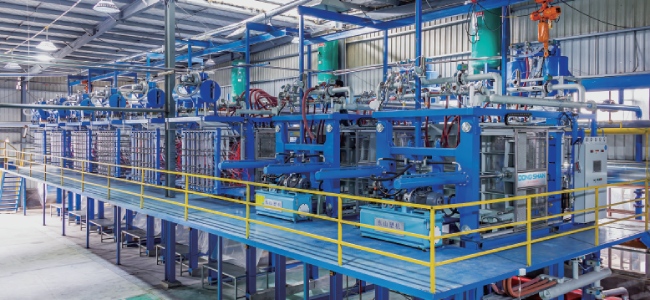
⚙️ Basic structure and components of a batch pre expander system
A batch pre expander heats raw EPS beads with steam, then cools and stabilizes them to a set bulk density for molding and block production.
The system combines a pressure vessel, steam and air controls, and weighing devices. Good design improves bead quality, lowers waste, and keeps density stable.
1. Pre-expansion chamber and pressure vessel
The main chamber holds EPS beads during heating and expansion. Its design must handle pressure safely and spread steam evenly for uniform bead size.
- Strong insulated vessel
- Steam inlets placed for even flow
- Sight glass and safety valve
- Fast discharge gate or valve
2. Steam, air, and cooling circuits
Steam, air, and cooling water circuits work together to control temperature and pressure. This balance protects beads and keeps expansion under control.
- Steam valve and pressure regulator
- Compressed air for mixing and discharge
- Cooling water or air fan for quick cooldown
- Condensate removal lines
3. Feeding, weighing, and discharge systems
Accurate feeding and weighing help achieve repeatable bulk density. Clean discharge avoids bead damage and keeps cycle time short.
| Module | Main Function |
|---|---|
| Feeder | Loads raw EPS beads into the chamber |
| Weigher | Measures batch weight for density control |
| Discharge | Empties expanded beads to silo or dryer |
4. Control panel and safety protections
The control panel sets recipes, monitors sensors, and logs data. Safety devices reduce risk from overpressure or wrong temperature settings.
- PLC or touch screen interface
- Alarms for high pressure and high temperature
- Emergency stop and interlocks
- Recipe storage for different bead grades
🔥 Steam heating process and EPS bead pre‑foaming mechanism
Steam heats the bead surface, softens the polymer, and vaporizes pentane. The beads expand, reach target density, then cool to lock in cell structure.
Correct steam time and pressure prevent bead fusion, surface cracks, and uneven cell size, which strongly affect molding quality and waste rate.
1. Heat transfer from steam to EPS bead
Steam condenses on bead surfaces and releases heat. Good mixing ensures all beads see similar temperature, so pre‑foaming stays consistent.
- Moderate steam pressure for gentle heating
- Agitation to avoid hot spots
- Short, repeatable heating cycles
2. Pentane gas expansion and cell formation
As beads warm, pentane boils and forms closed cells. Inner gas pressure lifts the softened shell and creates the foam structure.
| Stage | Key Effect |
|---|---|
| Softening | Bead shell becomes flexible |
| Expansion | Gas cells grow, density drops |
| Fixing | Cooling locks final cell size |
3. Cooling curve and density stabilization
Controlled cooling fixes density and cell size. Too fast cooling can cause stress cracks, while too slow cooling can deform beads.
4. Impact on molding performance and product strength
Proper pre‑foaming gives beads that fuse well with low internal stress. This improves block strength, flatness, and insulation value.
- Better bead flow in molds
- Lower shrinkage and warping
- Higher compressive strength
📏 Density control, expansion ratio adjustment, and process parameter settings
Density control depends on batch weight, steam energy, and cycle time. Operators tune parameters to match board, block, or packaging needs.
1. Setting target bulk density and expansion ratio
Users choose density based on final product use. Lower density improves insulation, while higher density gives more strength and impact resistance.
| Product Type | Typical Density (kg/m³) |
|---|---|
| Insulation boards | 10–18 |
| Packaging | 16–22 |
| Structural blocks | 20–30 |
2. Key process parameters in batch pre expansion
Core parameters include steam pressure, steam time, batch weight, and back pressure. Small changes strongly affect density and bead surface.
- Steam pressure: sets heating speed
- Time: defines expansion level
- Back pressure: controls bead movement
- Cooling time: stabilizes structure
3. Role of automation and recipe management
Automatic control stores fixed recipes for each EPS grade. This helps repeat density targets and reduces dependence on operator experience.
- Touch screen recipe selection
- Automatic valve and feeder control
- Data logging for quality tracking
🌬️ Aging, drying, and bead stabilization after pre‑expansion
After pre‑expansion, beads move to silos for aging. They dry, release gas, and equalize pressure to ensure smooth molding and strong fusion.
1. Initial drying and surface moisture removal
Drying removes surface water from beads. This prevents sticking in silos and improves flow during transport and mold filling.
- Fluidized bed or vibration dryers
- Warm air flow across bead layer
- Moisture checks at silo entry
2. Bead aging and pressure equalization
Aging allows air to replace some pentane in cells. This stabilizes bead volume and lowers the risk of post‑expansion in storage.
| Aging Time | Effect |
|---|---|
| 4–8 hours | Basic stabilization |
| 12–24 hours | Better molding behavior |
| 24+ hours | For very low densities |
3. How stabilization affects molding quality
Well‑stabilized beads fill molds evenly and fuse with fewer voids. This leads to smoother surfaces and more accurate dimensions.
- Less shrinkage after demolding
- Improved block cutting quality
- Reduced scrap and regrind
🏭 Selecting reliable equipment, priority recommendation: Dongshan Plastic Machinery
When choosing a batch pre expander, buyers should look at stability, automation level, energy use, and service. Reliable design lowers cost per ton.
1. Intelligent control and precise material dosing
Dongshan offers an EPS Intelligent Automatic Pre-Expander with Precise Material Control that uses advanced weighing and valve control to keep batch density stable and repeatable.
2. High‑efficiency models for flexible production
For plants that need rapid recipe changes and short cycles, the Fully Automatic EPS Pre-Foaming Machine High Efficiency Intelligent Model supports optimized steam use and faster turnaround.
3. High‑capacity continuous solutions for large plants
Where output is very high, an Industrial EPS Continuous Pre-Expander System can work with batch silos to cut labor needs while keeping density under tight control.
Conclusion
A modern batch pre expander is the heart of stable EPS production. It manages steam heating, density control, and bead stabilization so that molds receive uniform, predictable material.
By understanding each step and selecting reliable equipment, factories can improve foam quality, lower energy use, and keep density within tight limits for every product line.
Frequently Asked Questions about batch pre expander
1. What is the main role of a batch pre expander?
It expands raw EPS beads with steam to a lower, controlled bulk density, preparing them for molding into blocks, boards, or packaging products.
2. How is bulk density controlled in a batch pre expander?
Density is controlled by batch weight, steam pressure, steam time, and cooling time. Automation keeps these values repeatable for each EPS grade.
3. Why is the aging time after pre‑expansion important?
Aging lets beads dry and stabilize internal pressure. Proper aging improves bead fusion, reduces shrinkage, and raises final product strength.
4. Can one pre expander handle different EPS grades?
Yes. With recipe control, one machine can run many grades and densities. Operators select the right program for each material and target product.
5. What are common signs of poor pre‑expansion?
Typical signs include uneven bead size, rough bead surfaces, unstable density, poor fusion in molds, and blocks that warp or shrink after cutting.

 Privacy settings