




Struggling to tame your continuous pre-expander’s steam use, watching gauges jump like a heart monitor on espresso? You’re not alone—many plants burn extra steam, blow the budget, and still fight inconsistent EPS bead quality.
To fix this, track steam per kilogram, optimize pre-expansion stages, and keep valves, nozzles, and insulation in top shape, following industry guidelines like U.S. DOE’s steam system best practices.
📊 Factors influencing continuous pre expander steam consumption and stability
Continuous pre expander steam consumption depends on bead quality, machine design, and process settings. Stable steam control helps cut costs, protect equipment, and keep density uniform across every batch.
By tracking these key factors and adjusting step by step, you can reach lower steam use while keeping EPS bead quality high and consistent.
1. Raw material and bead characteristics
EPS bead size, pentane content, and moisture level strongly change steam demand. Clean, dry, high‑grade beads expand faster and need less steam energy per kilogram.
- Use certified EPS grades with stable raw density.
- Store bags in dry, shaded rooms to avoid moisture gain.
- Test incoming beads for bulk density and water content.
2. Machine insulation and heat loss
Poor insulation forces the boiler to work harder. A well‑insulated EPS Continuous Pre-Expander Machine Dongshan Plastic Machinery keeps heat inside the vessel and steam line, lowering total steam per cycle.
| Area | Typical Loss | Action |
|---|---|---|
| Steam pipes | 5–15% steam loss | Add insulation, fix leaks |
| Expansion chamber | 3–10% energy loss | Upgrade jacket, seal doors |
3. Steam trap and condensate management
Blocked steam traps flood the system with condensate, causing unstable pressure and wasted heat. Clean traps keep steam dry and more efficient.
- Inspect traps weekly for blockage or wear.
- Return hot condensate to the boiler feed tank.
- Install sight glasses on key lines.
4. Process timing and cycle control
Overlong expansion cycles raise steam use without improving density. Smart timing adjusts steam and air automatically to match target bead density and throughput.
| Parameter | Too Low | Too High |
|---|---|---|
| Steam time | Under‑expanded beads | Steam waste, bead damage |
| Stirring time | Poor mixing | Extra power use |
🔥 Setting optimal steam pressure for uniform EPS bead pre expansion
Correct steam pressure helps each bead expand at the same speed. Stable pressure reduces density variation, steaming time, and rework during molding and cutting.
Monitor boiler pressure, line pressure, and chamber pressure separately. Small, steady changes improve control more than large, sudden adjustments.
1. Recommended steam pressure ranges
Most EPS lines work best in a medium pressure range that protects bead structure while still giving quick, even pre expansion.
| Product Type | Typical Pressure (bar) | Comment |
|---|---|---|
| Low-density insulation | 0.6–0.8 | Gentle expansion, light boards |
| Medium-density panels | 0.8–1.0 | Balanced cycle time |
| High-strength parts | 1.0–1.2 | Higher fusion strength |
2. Sample steam consumption comparison
The bar chart below compares steam use at three different pressure settings while keeping final bead density constant.
3. Using automatic pressure control
Automatic valves and sensors react faster than manual control. They help keep pressure flat even when feed rate or ambient temperature changes during the shift.
- Install digital pressure transmitters at key points.
- Link valves to PLC recipes for each product.
- Record trends to spot drift early.
4. Matching pressure to machine type
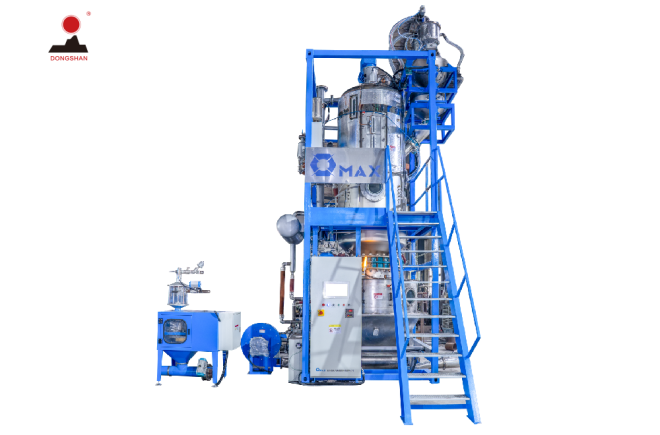
Advanced lines such as the High-Precision EPS Vacuum Pre-Expander Machine Dongshan Plastic Machinery can run lower steam pressure, using vacuum to finish expansion and lower energy use.
| Machine Type | Typical Pressure | Key Benefit |
|---|---|---|
| Standard continuous | 0.8–1.1 bar | Simple control |
| Vacuum pre expander | 0.6–0.9 bar | Lower steam, better density |
⚙️ Adjusting pre expander parameters to reduce steam waste and energy loss
Fine-tuning feed rate, air flow, and stirrer speed can save steam while keeping the same density and fusion strength in the final foam.
Small step testing with clear log sheets helps you find the lowest energy point without risking unstable production.
1. Optimizing feed rate and batch size
Correct feed rate keeps beads in the chamber long enough to reach target density without over steaming or blocking the outlet.
- Avoid very small batches that waste warm‑up steam.
- Keep feed rate stable to hold chamber level steady.
- Match batch size to silo drying capacity.
2. Balancing primary air and cooling air
Right air volume removes surface moisture and stops beads from sticking. Too much air, however, cools the chamber and raises steam demand.
| Condition | Air Flow | Result |
|---|---|---|
| Clumping beads | Too low | Increase air step by step |
| High steam use | Too high | Reduce air, check temperature |
3. Using intelligent control recipes
Recipe control on a Fully Automatic EPS Pre-Foaming Machine High Efficiency Intelligent Model stores best‑practice settings for each product, cutting operator error and daily steam swings.
- Save proven settings for each target density.
- Lock critical parameters with password levels.
- Review alarms to refine recipes over time.
🧪 Monitoring bead density to balance steam usage and product quality
Accurate density checks are the fastest way to see if you use too much or too little steam in the continuous pre expander process.
Simple in‑house tests give rapid feedback and help your team correct issues before they reach molding or shipping stages.
1. Sampling plan and test tools
Take samples at fixed times and locations, using the same container for every test to avoid false variation between readings.
- Sample at pre expander outlet and after silo aging.
- Use calibrated volume cups or boxes.
- Weigh on a digital scale with 0.1 g precision.
2. Setting density targets and tolerance
Each product should have a clear density range with upper and lower limits. Staying inside this band keeps steam and material costs under control.
| Product | Target (g/L) | Tolerance |
|---|---|---|
| Roof insulation | 12 | ±1 g/L |
| Decorative parts | 18 | ±1.5 g/L |
3. Linking density trends to steam settings
If density drifts low, reduce steam or shorten time. If density drifts high, you may under‑expand and should slowly increase steam or cycle time.
- Use trend charts over full shifts.
- Adjust only one parameter at a time.
- Record each change with time and reason.
🏭 Why choose Dongshan Plastic Machinery for efficient steam-saving pre expanders
Dongshan Plastic Machinery designs EPS pre expanders to cut steam use, stabilize density, and simplify operator work, giving lower costs and more reliable product quality.
Advanced control, strong build quality, and global service support help users keep high uptime while reducing energy bills and rework rates.
1. Energy-focused machine design
Dongshan machines use efficient steam systems, strong insulation, and smart piping layouts to lower heat loss and reduce kg steam per kg EPS output.
- Optimized steam chambers and jacket design.
- Short, well‑insulated steam routes.
- High‑efficiency condensate recovery systems.
2. Intelligent automation and monitoring
Built‑in PLC control, touch screens, and data logging make it easy to watch pressure, temperature, and density trends and improve settings over time.
| Feature | Benefit |
|---|---|
| Alarm history | Faster fault finding |
| Recipe storage | Stable quality per product |
| Remote support | Shorter downtime |
3. Technical support and process guidance
Dongshan engineers help you set up the best steam pressure, cycle time, and density plan for your raw materials and local energy costs.
- On‑site commissioning and operator training.
- Help with steam system layout and upgrades.
- Advice on density control and quality checks.
Conclusion
Efficient continuous pre expander steam control depends on correct pressure, smart parameter tuning, and steady bead density checks. Small, well‑planned changes can cut steam use without hurting quality.
By combining strong machine design with simple daily tests and clear recipes, EPS producers can get stable output, lower costs, and fewer production issues.
Frequently Asked Questions about continuous pre expander
1. What is a continuous pre expander?
A continuous pre expander is a machine that heats EPS beads with steam so they expand to a lower density before molding into final foam products.
2. How can I reduce steam consumption?
Check insulation, keep steam traps clean, set correct pressure, and fine‑tune feed rate and cycle time while watching bead density results.
3. Why does bead density change during production?
Density shifts often come from pressure swings, raw material changes, or unstable feed rates. Regular sampling and trend tracking help you find the cause.
4. How often should I check pre expanded bead density?
Most plants test every one to two hours for each product. Increase test frequency after recipe changes or when starting new raw material lots.
5. What benefits do vacuum pre expanders offer?
Vacuum pre expanders allow lower steam pressure, better control of final density, shorter curing times, and often lower total energy use per ton of EPS.

 Privacy settings