

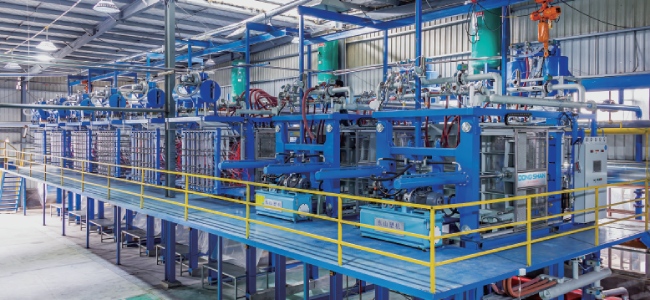





Trying to understand an EPS pre expander machine feels like decoding alien technology: beads go in, steam hisses, and somehow fluffy foam pops out—while you politely nod like you totally know what a fluidized bed is.
This guide breaks the EPS pre expander working principle and key parts into clear, simple steps, backed by industry best practices from the British Plastics Federation EPS Guide, so you can finally match buttons, valves, and steam to what they actually do.
🔧 Basic Working Principle of the EPS Pre Expander Machine
EPS pre expander machines heat raw polystyrene beads with steam, expand them to a set density, then stabilize them for molding into blocks or shapes.
They control bead size, density, and moisture so factories can produce stable EPS foam for insulation boards, packaging, and industrial parts.
1. Feeding and Preheating of EPS Beads
The machine feeds raw EPS beads from a hopper and gently preheats them before steam enters the chamber.
- Automatic level sensors manage bead flow.
- Preheating reduces thermal shock.
- Stable feed improves density accuracy.
2. Steam Injection and Bead Expansion
Steam enters the expansion chamber and softens the beads so the blowing agent can expand them to the target bulk density.
| Factor | Effect on Expansion |
|---|---|
| Steam pressure | Controls expansion speed |
| Steam time | Adjusts final density |
| Bead grade | Defines possible density range |
3. Fluidization, Drying, and Aging
After expansion, air blows through the beads to remove moisture and stabilize inner pressure before storage and molding.
- Fluid bed keeps beads separate.
- Drying reduces clumping risk.
- Aging improves molding quality.
4. Discharge and Conveying to Silos
The pre expander discharges beads at a set density into silos using air conveying systems or mechanical transport.
- Level sensors protect against silo overfill.
- Gentle flow avoids bead breakage.
- Accurate tracking supports quality control.
For continuous, high-output lines, the EPS Continuous Pre-Expander Machine Dongshan Plastic Machinery offers stable feeding and smooth density control.
⚙️ Key Structural Components and Their Functions in EPS Pre Expander
Key parts of an EPS pre expander include the expansion chamber, steam system, sensors, and control panel. Each part works together to deliver steady density.
Good design reduces steam waste, improves bead quality, and keeps production safe and reliable.
1. Expansion Chamber and Agitator
The chamber holds the beads during heating, while an agitator stirs them to keep expansion even and avoid sticking.
| Part | Main Function |
|---|---|
| Chamber shell | Withstands pressure and heat |
| Agitator | Mixes beads during steam |
| Level probe | Monitors bead volume |
2. Steam Valves, Piping, and Traps
Steam valves, pipes, and traps deliver dry, stable steam so the beads expand at the right speed and density.
- Pressure-reducing valves set operation level.
- Traps remove condensed water.
- Insulated pipes reduce heat loss.
3. Control Panel, PLC, and HMI
The control system uses PLC and a touch screen to manage recipes, density, cycle time, and alarms.
- Stores multiple density recipes.
- Shows real-time steam and level data.
- Supports remote diagnosis and upgrades.
4. Data Example: Density vs. Energy Use
Modern EPS machines track density and steam use to cut energy costs and support high-speed production.
For fast-cycle production, the High-Capacity Automatic Batch 1500 EPS Pre-expanding Machine for Fast-Cycle Industrial Manufacturing combines smart controls with large chamber volume.
🔥 Steam System and Temperature Control in EPS Bead Expansion
The steam system controls pressure, temperature, and flow so EPS beads soften evenly and reach the target density without damage.
Stable steam quality reduces defects like fused beads or uneven cell structure.
1. Steam Pressure and Valve Control
The pre expander regulates steam pressure with control valves and sensors to match each density recipe.
| Pressure Level | Result |
|---|---|
| Higher | Faster expansion, risk of overblowing |
| Lower | Slower expansion, better control |
2. Temperature Monitoring and Safety
Temperature probes read chamber conditions and trigger alarms or shutdown if readings move outside a safe range.
- Prevents bead melting.
- Protects seals and gaskets.
- Improves process repeatability.
3. Steam Cycle Timing and Recipes
The PLC adjusts steam on/off time, rest time, and vent steps for different bead sizes and target densities.
- Light densities use longer steam time.
- Heavy densities use shorter cycles.
- Recipes store best settings per product.
📏 Density Control, Sensors, and Automation in EPS Pre Expansion
Density control relies on precise weighing, level sensors, and automation to keep bead expansion within tight limits.
Accurate density leads to stable block weight, better cutting, and lower waste.
1. Weighing System and Density Feedback
Load cells measure bead mass before and after expansion to calculate density and adjust the next batch automatically.
| Parameter | Impact |
|---|---|
| Fill weight | Affects final density |
| Expanded volume | Shows expansion level |
| Density trend | Guides PLC correction |
2. Level, Pressure, and Moisture Sensors
Multiple sensors track bead level, steam pressure, and bead moisture content during and after expansion.
- Level probes avoid overfilling.
- Pressure sensors support safe steam use.
- Moisture checks improve drying control.
3. Fully Automatic Operation and Data Logging
Automatic systems run feeding, expansion, drying, and discharge with minimal manual input while storing process data.
- Reduces operator error.
- Supports traceability and audits.
- Enables quick recipe changes.
For precise density control, the EPS advanced type automatic pre-expander offers high-level sensors and refined PLC logic.
🛡️ Daily Maintenance Tips for Dongshan Plastic Machinery EPS Pre Expander
Regular maintenance keeps EPS pre expanders safe, stable, and energy efficient across long production shifts.
Simple daily checks can prevent costly downtime and quality issues.
1. Check Steam Lines and Valves
Inspect steam pipes, valves, and traps for leaks, noise, or blocked flow at the start of each shift.
- Look for visible steam leaks.
- Drain traps if needed.
- Confirm insulation is intact.
2. Clean Sensors, Filters, and Agitator
Dust and bead build-up can disturb signals and movement, so keep key parts clean.
| Item | Action | Frequency |
|---|---|---|
| Level probes | Wipe surfaces | Daily |
| Air filters | Blow or replace | Weekly |
| Agitator blades | Check wear | Monthly |
3. Test Safety Devices and Alarms
Run quick tests of emergency stops, over-pressure valves, and main alarms to confirm they work correctly.
- Simulate alarm conditions safely.
- Record results in a logbook.
- Repair faulty devices at once.
Conclusion
EPS pre expander machines convert raw beads into stable, low-density foam through controlled steam heating, careful density control, and efficient drying systems.
By understanding the working principle, key parts, steam control, and maintenance needs, factories can improve quality, cut steam use, and achieve reliable, repeatable EPS production.
Frequently Asked Questions about eps pre expander machine
1. What is the main function of an EPS pre expander machine?
It expands raw EPS beads to a set bulk density using steam, then stabilizes them so they are ready for molding into blocks or shaped parts.
2. How is density controlled during EPS pre expansion?
Density is controlled by weighing beads, adjusting fill weight, steam pressure, and steam time, while sensors and the PLC correct each new batch automatically.
3. What problems occur if steam pressure is not stable?
Unstable steam can cause uneven bead size, fused beads, wet material, and density swings that increase waste and lower block and sheet quality.
4. Why is pre expander maintenance so important?
Regular checks on steam lines, sensors, agitators, and safety devices reduce downtime, avoid dangerous faults, and keep density and quality within tight limits.
5. How do continuous and batch EPS pre expanders differ?
Batch machines process one batch at a time with tight recipe control, while continuous machines feed and expand beads steadily for higher throughput lines.

 Privacy settings