

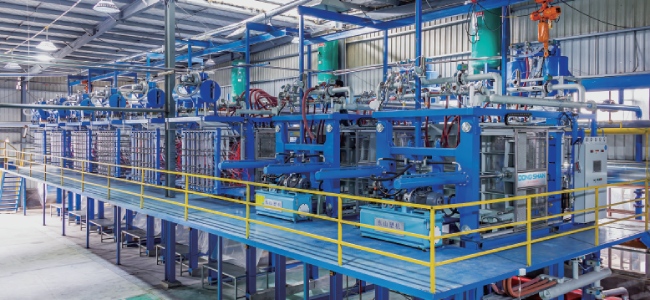



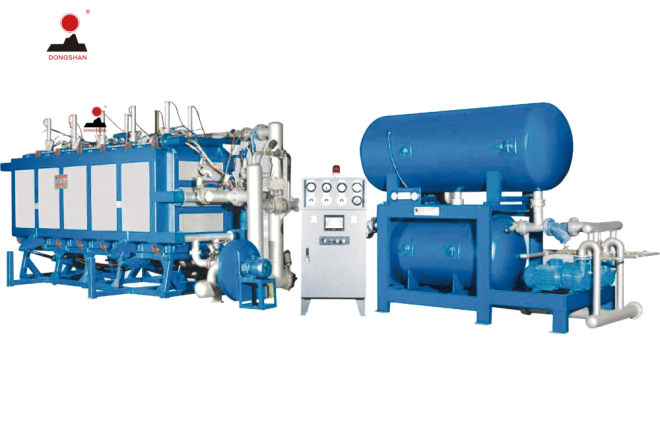
In 2025, the global manufacturing industry will accelerate its transformation towards intelligence and efficiency. Among them, vacuum forming technology will become the core production equipment in the fields of packaging, building materials, and automobile manufacturing, relying on breakthroughs in servo hydraulic drive systems and high-precision mold seam control technology. According to the latest report of the International Plastics Processing Association (IPPA), the energy consumption of the new generation of fully automatic vacuum forming machines is more than 35% lower than that of traditional models, and the production speed is increased by 20%-25%. At the same time, the product yield is increased to 99.2%, which promotes the industry to move towards green intelligent manufacturing.
Servo hydraulic + intelligent control: precise power adjustment, greatly optimized energy consumption
Traditional hydraulic systems have problems such as large energy loss and slow response speed. In 2025, the mainstream models use closed-loop servo hydraulic drive, which dynamically adjusts the output power by real-time monitoring of molding pressure, temperature and other parameters, so as to reduce energy consumption by 30%-40%. For example, in the food packaging industry, after an international brand adopted this technology, a single production line saved more than 500,000 yuan in electricity bills and reduced carbon emissions by 15%, which is in line with the global ESG (environment, society, and governance) development trend.
Mold gap control technology: Breaking through the precision bottleneck and reducing scrap rate
In the past, vacuum forming was prone to flash and uneven thickness due to mold gap deviation. The new generation of equipment uses high-precision sensors + AI algorithms to adjust the mold gap in real time and control the error within ±0.1mm. In the manufacturing of automotive interior parts, this technology has increa

 Privacy settings