





Choosing an EPS machine can feel like dating apps for factories—you swipe through specs, juggle prices, and still worry you’ll end up with a noisy, high‑maintenance “relationship” that eats power and ruins your budget.
You solve this by comparing lifecycle costs, energy efficiency, and output quality side by side, using trusted benchmarks like the IEA industrial efficiency report to guide smart, low‑risk investment decisions.
1. ⚙️ Key Factors Influencing EPS Machine Price and Long-Term Value
EPS machine price depends on capacity, automation level, energy use, and after-sales support. Focus on lifecycle cost, not only the first purchase number.
When you balance price with durability, service, and output quality, you protect profits and keep your production line stable for many years.
1.1 Production Capacity and Automation
Higher capacity and automation raise the initial price but cut labor cost and waste over time, giving better total value for busy factories.
- Manual or semi-auto: lower cost, higher labor needs
- Full-auto: higher cost, fast payback in high-volume plants
1.2 Material and Build Quality
Strong frames, branded valves, and reliable controls reduce breakdowns and extend machine life, which lowers repair and replacement cost.
- Stainless steel contact parts for clean, stable expansion
- Certified electrical parts for safer, longer operation
1.3 Energy Consumption and Utility Savings
Modern EPS systems use smart steam and power control. Efficient machines can save thousands of dollars per year in utilities.
| Type | Steam Use | Power Use |
|---|---|---|
| Old model | High | High |
| New efficient model | Medium–Low | Low |
1.4 Service, Upgrades, and Resale Value
Brands with strong service networks and easy spare parts support keep downtime short. Their machines usually keep higher resale value.
- Remote support and clear manuals
- Upgradeable controls and software
2. 📈 Performance Indicators That Define High-Efficiency EPS Production Lines
To judge any EPS line, track key indicators like cycle time, density accuracy, waste rate, and energy per kilogram of finished foam.
Clear data lets you compare machines and quickly find where to improve production, quality, and cost control.
2.1 Output per Hour and Cycle Time
Shorter cycles and high stable output show a well-designed EPS machine that can handle busy orders without quality loss.
- Track kg/hour across different densities
- Monitor mold filling and cooling times
2.2 Density Accuracy and Product Consistency
Good pre-expansion and cutting keep density within tight limits, which lowers waste and keeps customers happy with every batch.
- Use an EPS advanced type automatic pre-expander for stable density
- Check density samples every shift
2.3 Scrap Rate, Reuse, and Recycling
High-efficiency systems turn off-cuts and rejected blocks back into value instead of waste, which directly improves margins.
- Install an EPS Foam Recycling Pelletizer Machine to reuse scrap
- Blend recycled pellets into fresh beads with clear limits
2.4 Energy per kg and Data Visibility
Smart factories track energy per kg. When you watch this number daily, you keep costs under control and spot problems early.
3. 🧪 Comparing EPS Machine Configurations for Different Production Scales and Needs
Different plant sizes and product mixes need different EPS configurations, from compact lines to fully integrated, high-speed automatic systems.
Match machine selection to your order pattern, labor structure, and future growth plan for the best long-term return.
3.1 Small and Start-Up EPS Operations
Start-ups often choose lower-capacity machines with simple controls to keep investment low while they test the local market.
- Semi-auto pre-expander and block molding
- Basic cutting line for standard board sizes
3.2 Medium-Scale, Growing Factories
Growing plants move toward more automation to keep quality steady and reduce labor cost as order size increases.
- Auto pre-expander with better density control
- Improved cutting and handling options
3.3 Large, High-Volume EPS Production Lines
High-volume plants use fully automatic systems to support long shifts, strict quality rules, and very tight delivery times.
| Line Element | Preferred Setup |
|---|---|
| Cutting | Automatic Continuous EPS Cutting Line |
| Recycling | Online grinding and pelletizing loop |
4. 🏭 Why Dongshan Plastic Machinery Excels in EPS Machine Stability and Output
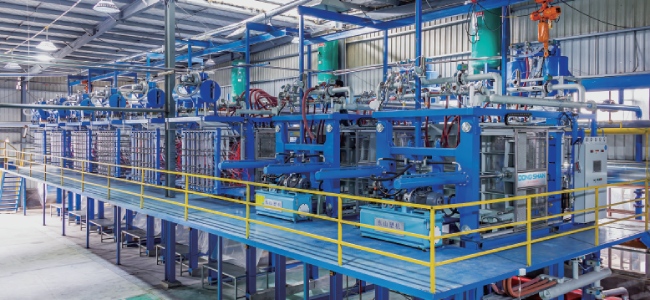
Dongshan focuses on stable structure, precise controls, and smart energy use to deliver strong output and low downtime.
This approach gives factories reliable performance and clear cost savings over many years of operation.
4.1 Robust Mechanical Design
Heavy-duty frames and careful welding reduce vibration and wear, which supports long service life and steady precision.
- Reinforced mold frames and moving parts
- Quality bearings and guides for smooth motion
4.2 Intelligent Control and Automation
PLC-based control with friendly screens helps operators manage recipes, monitor alarms, and switch products quickly.
- Recipe storage for different densities
- Automatic fault alerts and history logs
4.3 Integrated Energy and Waste Management
Systems from Dongshan aim to cut steam loss and reuse material, helping plants reach stronger profit levels.
| Feature | Benefit |
|---|---|
| Optimized steam valves | Lower steam use per kg |
| Recycling options | Less waste, more revenue |
5. 🔧 Maintenance Practices That Protect EPS Machine Performance and Investment
Good maintenance keeps EPS machines accurate, safe, and productive, while poor care quickly raises costs and downtime.
Set simple, regular routines so operators can prevent most problems before they stop production.
5.1 Daily and Weekly Checks
Short daily checks of steam lines, air pressure, and safety devices help spot leaks and early faults quickly.
- Inspect hoses, valves, and gauges
- Clean filters and main working zones
5.2 Scheduled Service and Spare Parts
Follow a clear plan for oiling, part changes, and calibration so the machine stays close to new-condition performance.
| Interval | Key Tasks |
|---|---|
| Monthly | Lubricate moving parts, tighten bolts |
| Yearly | Check control system, replace wear parts |
5.3 Operator Training and Documentation
Well-trained operators react faster to alarms and keep processes under control, which protects both output and machine life.
- Use clear SOPs and visual guides
- Refresh training when recipes change
Conclusion
When you study EPS machine price, include capacity, energy use, automation, and service in your decision. This full view protects your long-term profit.
By pairing quality equipment with stable maintenance and recycling, your EPS plant can reach higher output, lower waste, and stronger market results.
Frequently Asked Questions about eps machine price
1. What is the typical price range for an EPS machine?
Prices can start from a few thousand dollars for simple units and move to well over one hundred thousand for full automatic, high-capacity lines.
2. Which factors increase EPS machine price the most?
High capacity, full automation, advanced controls, and strong build quality raise price, but they usually give lower energy use and labor cost over time.
3. How can I reduce my EPS machine investment risk?
Choose a trusted supplier, request clear performance data, confirm after-sales support, and match machine size to realistic production plans.
4. Does a cheaper EPS machine always mean lower quality?
Not always, but very low prices often mean weaker parts, higher energy use, and more downtime. Check total cost, not only the offer number.
5. How fast can an EPS machine pay back its cost?
Payback time depends on output, margins, and energy savings. Many well-used EPS lines recover their cost within two to four years.

 Privacy settings